

In our modern, fast-paced world, it often feels like our “internal engine” is constantly idling at a high RPM. Whether it’s a demanding workday in Dickinson, the relentless ping of phone notifications, or the invisible weight of a busy schedule, many of us spend our lives in a state of low-grade “Fight or Flight.”
At The Wild Elm, we believe that the most important work we do doesn’t just happen on a yoga mat. It happens in the small, quiet moments of our daily lives. Understanding how to use nervous system regulation techniques is like having a remote control for your stress levels.
“Science shows that simply being in nature—even for ten minutes—lowers cortisol levels. Here in Dickinson, we are lucky to have wide horizons and fresh prairie air that acts as a natural balm for a frazzled mind.”Lisa Kostelecky
Here is a look at what happens when your system gets overwhelmed, and five practical ways to find your “Rooted Resilience” anywhere, anytime.
Understanding the “Fight or Flight” Response
Your nervous system has two main modes: the Sympathetic (Fight or Flight) and the Parasympathetic (Rest and Digest).
When you are in Fight or Flight, your body believes it is under threat. Your heart rate increases, your breathing becomes shallow and high in your chest, and your brain prioritizes survival over logic. This was great for our ancestors outrunning predators, but it’s exhausting when it’s triggered by a full inbox or a traffic jam on 3rd Ave.
Regulating your nervous system is the process of manually “flipping the switch” back to the Rest and Digest mode. You don’t need a gym or an hour of silence to do it—you just need a few intentional tools.
1. The 4-7-8 Breathing Technique
Your breath is the only part of your autonomic nervous system that you can consciously control. By changing how you breathe, you send a direct biological signal to your brain that says, “I am safe.”
The Practice:
-
Inhale quietly through your nose for a count of 4.
-
Hold your breath for a count of 7.
-
Exhale forcefully through your mouth, making a “whoosh” sound, for a count of 8.
Why it works: The long exhale is the key. It stimulates the Vagus nerve, which is the primary “brake” for your stress response. Try this at your desk or in your car before a big meeting.
2. Spend Time in the North Dakota Fresh Air
There is a reason we chose the “Wild” in our name. Science shows that simply being in nature—even for ten minutes—lowers cortisol levels. Here in Dickinson, we are lucky to have wide horizons and fresh prairie air that acts as a natural balm for a frazzled mind.
The Practice: Step outside. Don’t look at your phone. Just observe the movement of the clouds or the wind in the trees. Why it works: Nature provides “soft fascination,” a type of visual input that allows the prefrontal cortex to rest and recover from the “hard focus” required by screens and work tasks.
3. “Earthing” or Grounding Barefoot
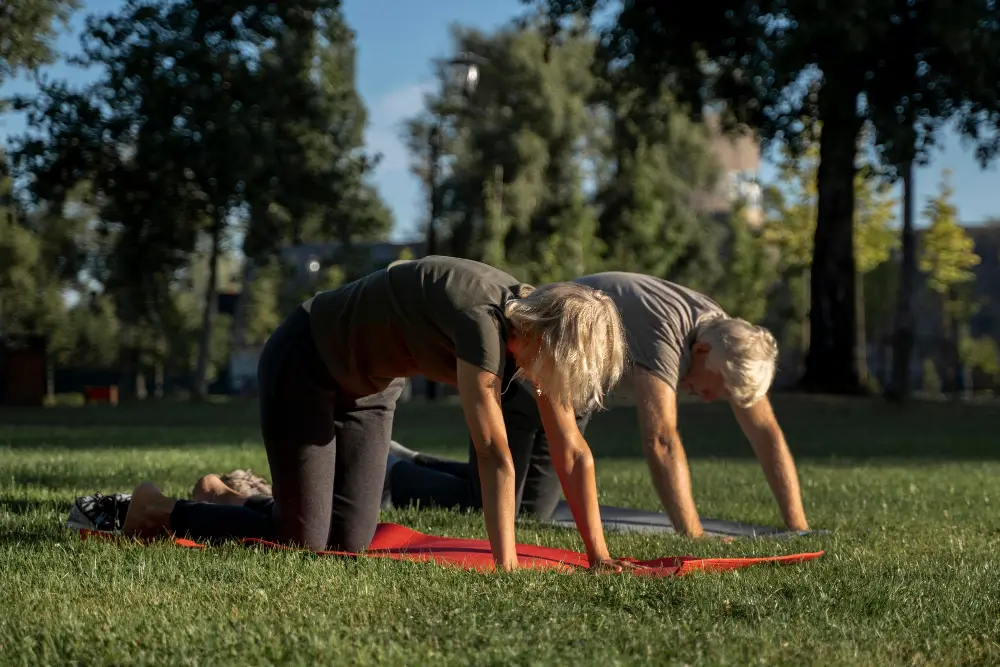
Grounding, also known as “Earthing,” involves direct skin contact with the surface of the Earth. While it might sound a bit “wild,” there is fascinating research suggesting that the Earth’s electrons can help neutralize free radicals in our bodies and settle our bio-electrical state.
The Practice: Take your shoes off. Stand in the grass in your backyard or a local park for 5 to 10 minutes. Why it works: It literally forces you to be “rooted.” The sensory input of the cold grass or the solid earth beneath your feet pulls your awareness out of your racing thoughts and back into your body.
4. The Power of “Cold Exposure”
If you feel a sudden spike of anxiety or overwhelming stress, you can use temperature to “reset” your system. This is a physiological shortcut to calm.
The Practice: Splash ice-cold water on your face or hold an ice cube in your hand for one minute. Why it works: This triggers the “Mammalian Dive Reflex,” which naturally slows the heart rate and redirects blood flow to the heart and brain, snapping you out of a panic loop.
5. Mindful “Somatic” Checking In
Often, we don’t realize our nervous system is dysregulated until we are already exhausted. Somatic awareness is the practice of “listening” to the body’s subtle signals.
The Practice: Set a timer once a day. Close your eyes and scan your body. Are your shoulders up by your ears? Is your jaw clenched? Is your belly tight? Why it works: By simply noticing the tension and choosing to soften those specific muscles, you interrupt the feedback loop between a stressed body and a stressed mind.
Take the Next Step: From Tools to Sanctuary
While these five techniques are incredibly effective for managing daily stress, sometimes we need a deeper, more dedicated space to truly heal. It is one thing to manage stress; it is another to build the internal resilience that prevents the “burnout” cycle from starting in the first place.
At The Wild Elm, we provide two distinct paths for those wanting to deepen this work:
-
Private Yoga Sessions: In a one-on-one environment, we can tailor the movement and breathwork specifically to your nervous system’s unique needs. We create a “Sanctuary” in your own home where you can safely explore and release stored tension.
-
Recovery Yoga: For those navigating sobriety or significant life transitions, our Rooted Resilience approach offers a brave space to use these somatic tools alongside a supportive community.
Nervous system regulation is a practice, not a one-time event. Whether you are practicing 4-7-8 breathing at your kitchen table or joining us for a sunset pop-up, you are doing the vital work of returning to yourself.